GenAI multimedia creation: Guide to public comfort levels
"The shift from manual creation to algorithmic generation represents a fundamental change in how we perceive human expression."
The rise of GenAI multimedia creation is fundamentally altering the relationship between creators and consumers by automating complex technical tasks.
This transition involves navigating public skepticism regarding news authenticity, changing job landscapes in creative industries, and shifting aesthetic preferences among younger generations.
This article explores the impact of these technologies on content production, the varying levels of public comfort with automated news, and the tension between human bias and digital innovation.
How does GenAI multimedia creation affect the creative industry?
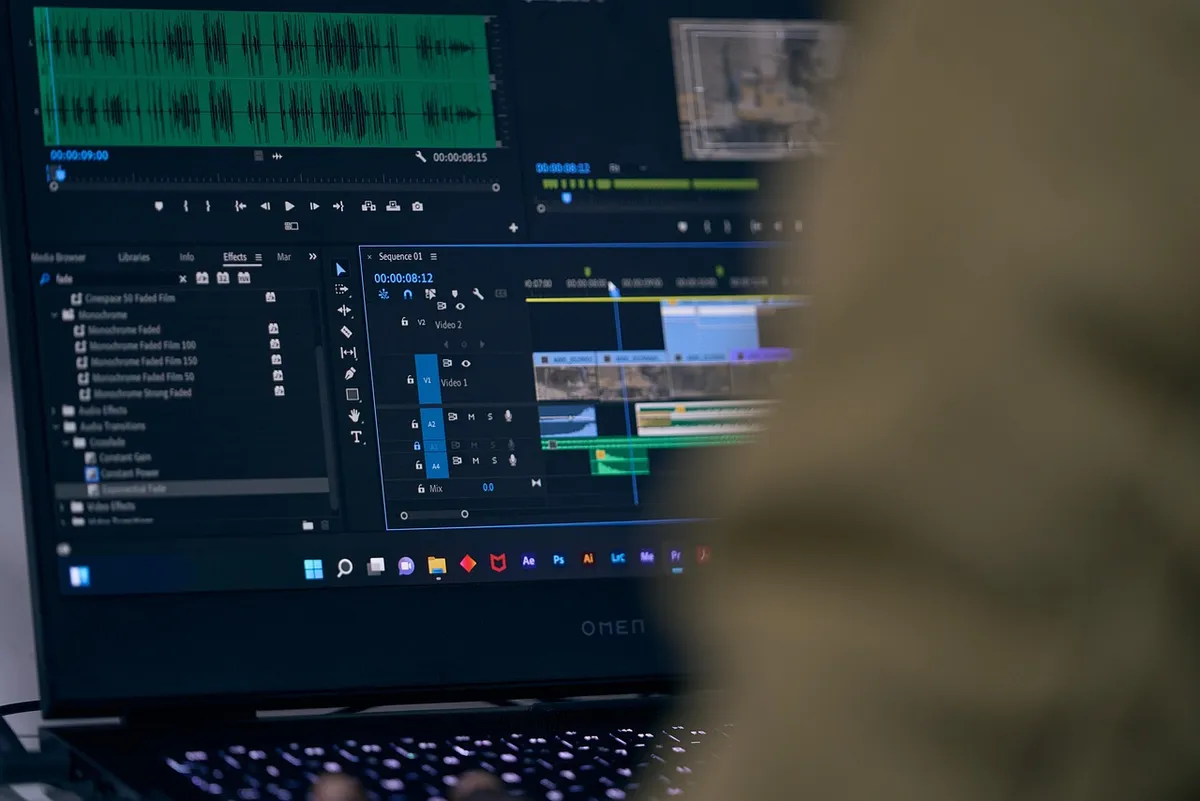
In a dimly lit studio at midnight, an illustrator watches a screen flicker as genai completes a complex landscape, feeling a sudden chill of uncertainty.
An artist sits at a digital tablet, watching a cursor move on its own to finish a brushstroke. The sudden shift toward automation has redefined the value of human-led production.
The integration of generative tools into daily workflows marks a significant shift in traditional creative roles. While some view these tools as assistants, others see them as replacements for specialized labor.
This tension is evident in how different regions and industries react to the speed of automation.
In April 2023, it was reported that image generation AI has resulted in 70% of the jobs for video game illustrators in China being lost. This sudden change in the job market highlights the disruption caused by rapid technological advancement.
- Define the creative scope of the project.
- Utilize generative tools to produce initial drafts.
- Refine the output through human artistic intervention.
What are the different views on AI-generated news?
At dawn, a reader grips a cold smartphone in a crowded cafe, squinting at a headline generated by genai with growing suspicion.
A reader scrolls through a news feed on a smartphone, pausing to wonder if the text was written by a journalist or a machine. The question of authorship creates a divide in how information is consumed.
Public perception of automated journalism varies significantly based on the level of human involvement. The degree of oversight often dictates whether a reader trusts the information presented.
According to the Reuters Institute, 52% of people in America and 47% in Europe are uncomfortable with news produced by "mostly AI with some human oversight," while only 23% and 15% respectively report being comfortable.

This suggests that the presence of AI without significant human intervention triggers widespread skepticism.
In contrast, different levels of human involvement change the comfort levels. 42% of Americans and 33% of Europeans reported that they were comfortable with news produced by "mainly human with some help from AI."
In this sequence, the second step is the most extensive.
Is there a bias against AI-generated art?
A collector stands in a gallery, looking at a portrait and feeling a strange sense of detachment upon learning its origin. The intersection of technology and fine art has sparked intense debate over authenticity.
The emotional response to machine-made art often conflicts with its commercial success. While high-profile sales prove market interest, psychological factors suggest a lingering resistance to non-human creators.
According to a research study from the National Library of Medicine, humans inherently show a bias against artwork described as being AI-generated. This psychological barrier remains a hurdle for the widespread acceptance of digital art.
Despite this, the market has shown unexpected movement. In 2018, an auction sale of artificial intelligence art was held at Christie's in New York where the AI artwork Edmond de Belamy sold for US$432,500, which was almost 45 times higher than its estimate of US$7,000–10,000.
How do younger generations view AI-generated content?
A teenager taps on a social media app, interacting with a chatbot that responds instantly to a prompt. For those born into a digital-first era, these tools are becoming second nature.
The demographic divide in technology adoption is becoming increasingly pronounced. Younger users often show higher levels of engagement and acceptance compared to older cohorts.

A 2024 survey by the Just So Soul social media app reported that 18% of respondents born after 2000 used generative AI "almost every day," and that over 60% of respondents like or love AI-generated content (AIGC), while less than 3% dislike or hate it.
This high level of engagement suggests a future where AI-driven content workflow is the standard. These users are not just consumers but active participants in the new media ecosystem.
What are the risks of using generative AI in organizations?
An executive stares at a report, noticing a factual error that was introduced by an automated writing tool. As businesses adopt these technologies, the risks of inaccuracy become a primary concern.
The speed of adoption often outpaces the development of reliability protocols. Organizations must balance the efficiency of automation with the necessity of truth.
These errors can undermine the credibility of an entire organization.
Addressing these risks requires a structured approach to implementation:
- Establish clear human-in-the-loop protocols to verify all automated outputs. 2. Implement rigorous fact-checking workflows to mitigate hallucination risks. 3. Train staff on the specific limitations of generative tools to prevent over-reliance.
A final check of all generated materials against primary sources is essential to maintain quality.
How does global sentiment differ regarding AI impact?
A traveler looks at a cityscape, thinking about how much the world has changed due to digital transformation. Different regions hold varying outlooks on the global influence of these technologies.
While privacy concerns and the pace of change are common themes, the perceived impact of AI is not uniform across the globe. Regional perspectives often reflect local economic and social realities.

Despite expressing concerns about privacy and the pace of change, 68% of Asia-Pacific respondents believed that AI was having a positive impact on the world, compared to 57% globally. This higher optimism in the Asia-Pacific region contrasts with more cautious views elsewhere.
The future of digital media will likely be shaped by these varying levels of global trust. As the technology evolves, the gap between those who embrace it and those who fear it may continue to fluctuate.
The same subject is also called AI content paradigm shift.
The same subject is also called Generative AI media.
The same subject is also called Text audio video AI.
The same subject is also called New media production AI.
This part also covers Multimodal AI content trends.
AI driven content workflow
Related







Comments 0