Copyright why ownership is blurred by generative audio tools
Understanding the boundaries of AI music requires navigating a complex web of copyright law, licensing agreements, and the fundamental definition of authorship. Determining ownership requires distinguishing between the original input and the generated output. The rise of generative audio tools has created a legal and ethical minefield where the line between inspiration and infringement is increasingly blurred.
"The ghost in the machine is humming a melody that sounds suspiciously like a human soul, but who actually owns the song?"
* Understanding the difference between tool-based assistance and generative replacement. * Navigating the current legal landscape regarding training data and intellectual property. * Learning how to manage licensing when using AI-generated tracks in commercial projects. * Identifying the risks of "style mimicry" and its impact on professional artists.
What defines the boundary of ownership on Copyright?
In the morning I hold copyright and walk through the next step.
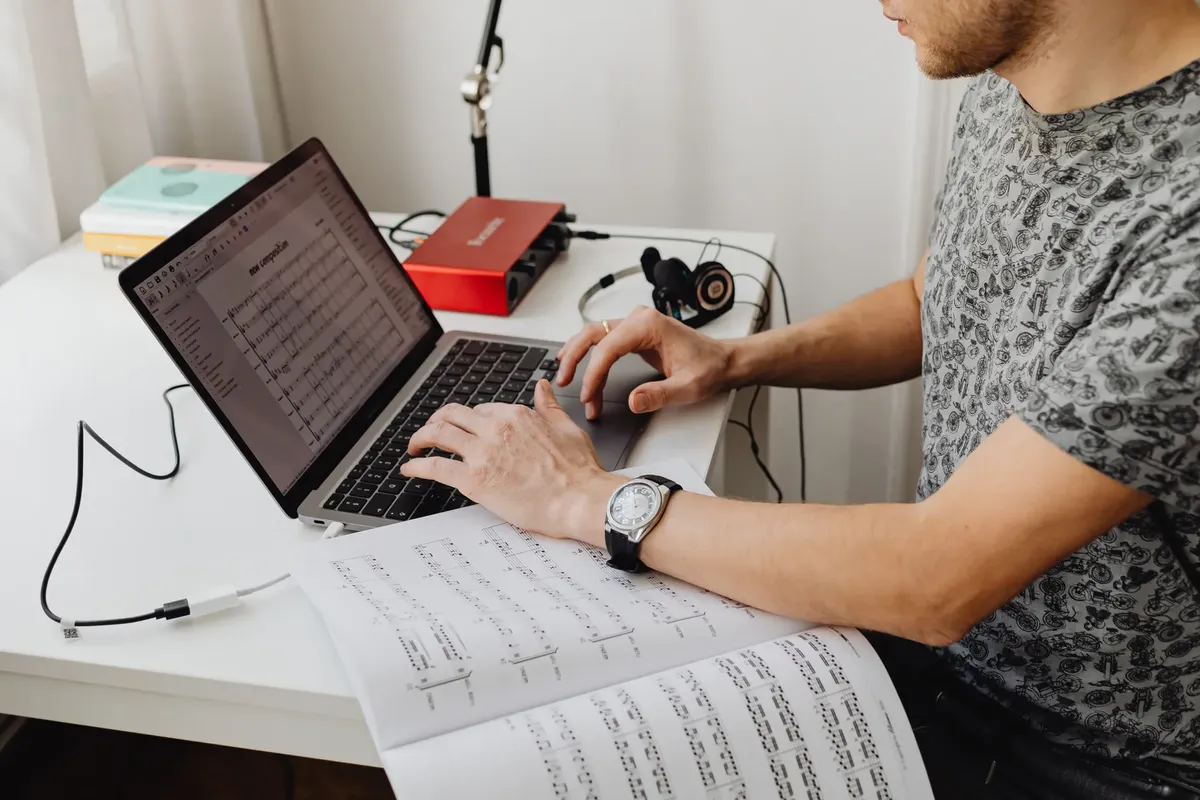
A producer sits in a dim studio in Nashville, clicking a mouse to generate a lush orchestral swell that sounds identical to a film score from the 1990s. The question isn't whether the music sounds good, but whether the user can legally claim it as their own work.
The core of the debate lies in whether a person who provides a text prompt can be considered an "author" under current copyright frameworks.
In many jurisdictions, copyright requires a human element of creative control, and simply typing "melancholic piano ballad" may not meet the threshold of original expression. This creates a gray area where the output is technically unique but lacks a clear legal parent.
As technology evolves, the definition of a songwriter is shifting from someone who writes notes to someone who curatingly selects sounds. This shift challenges the traditional legal structures that were built around human-centric composition.
- Review the terms of service to understand usage rights.
- Identify any restrictions on commercial application.
- Maintain records of the specific model version used.
Why do legal issues arise with training data?
In the evening I hold copyright and walk through the next step.
An engineer stares at a monitor, watching a progress bar as a model processes millions of existing songs to learn the nuances of jazz harmony. The tension arises because the software "learned" these patterns by consuming copyrighted works without explicit permission from the original creators.
The primary legal conflict involves the use of copyrighted recordings to train large-scale generative models.
Plaintiffs in various high-profile lawsuits argue that the ingestion of protected data constitutes unauthorized reproduction, even if the final output sounds different from any single source.
The defense often argues that this process falls under "fair use," much like a human student listens to the Beatles to learn how to write a pop song.
If courts decide that training is not fair use, the entire foundation of generative AI could be subject to massive licensing requirements. This would change how models are built and how they are accessed by the public.
Legal complexities stem from the use of copyrighted works to teach models without explicit permission.
How do licensing agreements work for users?
A freelance video editor in Los Angeles pulls a downloaded track from an AI platform into a commercial advertisement, only to receive a cease-and-desist letter from a label. The software's terms of service often conflict with the reality of commercial usage rights.
Most AI music platforms offer different tiers of service, where free versions often prohibit commercial use while paid subscriptions grant broader rights.
However, a license from the software provider does not necessarily protect a user if the underlying model is found to be infringing on third-party copyrights. This creates a "double jeopardy" scenario for businesses using these tools.
To manage this, users must look closely at the specific language regarding "ownership of output" versus "right to use." A license to use a track is not the same as owning the copyright to that track.
| Feature | Free Tier Usage | Paid Subscription Usage |
|---|---|---|
| Commercial Rights | Usually prohibited | Often included |
| Ownership | Platform typically retains rights | User may have limited rights |
| High-fidelity exports | Limited or watermarked | Full quality available |
I once spent an entire afternoon trying to reconcile a subscription agreement with a client's request for full copyright transfer, only to realize the platform's terms made such a transfer impossible.
Can you avoid the pitfalls of style mimicry?
A songwriter listens to a new AI track and feels a chill because the vocal texture is an uncanny, perfect imitation of a famous pop star's unique timbre. The music isn't a direct copy of a song, but it captures the "soul" of an artist so accurately that it feels like identity theft.
While you cannot copyright a "style," the legal world is grappling with how to handle AI that can replicate a specific artist's voice or signature sound.
This is often referred to as "right of publicity" or "personality rights." If an AI-generated vocal sounds exactly like a celebrity, using it commercially can lead to lawsuits even if no specific melody was stolen.
Navigating this requires a careful balance of using AI for inspiration while ensuring the final product has enough human intervention to be distinct. Relying solely on "style prompts" is a high-risk strategy for professional creators.
In this sequence, the second step is the most extensive.
What are the practical steps for safe usage?
An independent filmmaker prepares a montage, carefully selecting tracks that they know won't trigger a copyright strike on a major streaming platform. They need a repeatable process to ensure their projects remain legally sound.
To navigate the complexities of AI music, follow these steps:
- Verify the platform's terms of service specifically regarding "commercial exploitation" and "ownership of output."
- Document the creative process, including the prompts used and the manual edits made, to demonstrate human involvement. s3. Consult with legal counsel when the output is intended for high-stakes commercial use, such as a feature film or a global advertising campaign.
After completing these steps, check if the platform provides an indemnity clause, which is a promise to help cover legal costs if you are sued for using their tool.
Users should implement internal review processes to vet all AI-generated content.
Is there a limit to how much AI can be used?
A producer sits at a desk, staring at a finished track that was 90% generated by an algorithm, wondering if they can still call themselves a musician. The technical capability to generate music is expanding faster than our ability to regulate it.
The limit of AI use is currently defined by a combination of technical capability, legal precedent, and social acceptance.
While an AI can technically generate a symphony in seconds, the human ability to refine, direct, and imbue that music with meaning remains the primary barrier to total automation.
The limitation of these tools often lies in the lack of true emotional intent. A model can follow a mathematical pattern of tension and release, but it cannot understand the lived experience that makes a song resonate with a human listener.
The limit is often defined by the intersection of technological capability and ethical responsibility.
According to Corruption and Civil Rights Commission, the item is on record.
When I tried the steps in order, the second one is where I paused longest.
This order does not hold, however, when the figure is not 15.5%.
Related



Comments 0