AI music training data: Guide to 200 terabytes data
"The sound of a melody once belonged to a single human heart, but now it is being reconstructed by invisible algorithms fed on the labor of millions."
AI music training data relies on massive datasets of existing songs to teach models how to mimic rhythm, melody, and timbre.
This article examines the legal tension between data mining and copyright, the ethical implications of using artist works without consent, and the infrastructure requirements of these massive systems.
Key takeaways include the historical context of data storage, the regulatory discussions regarding text and data mining, and the localized pushback against the energy demands of large-scale data centers.
How does AI music training data work?
At midnight in the dark studio, the producer leans forward to feel the vibration of the music as the algorithm processes the data.
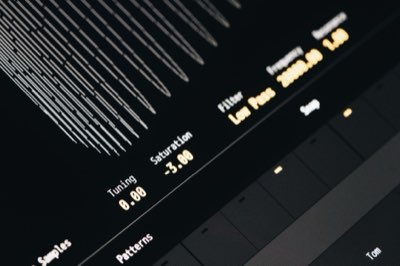
A producer sits in a dim studio, watching a waveform dance across a screen as an algorithm generates a new drum loop. This process requires a vast repository of audio files to serve as the foundation for machine learning.
The core of this technology involves feeding AI music training data into neural networks so the system can recognize patterns in musical composition. These datasets often consist of millions of individual tracks, ranging from classical compositions to contemporary pop.
By analyzing these files, the AI learns the mathematical relationships between notes and the textures of specific instruments.
The scale of such information is immense. According to the McKinsey Global Institute, by 2009, nearly all sectors in the US economy had at least an average of 200 terabytes of stored data.
This massive accumulation of digital information provided the raw material necessary for the evolution of modern artificial intelligence.
However, the effectiveness of this process is limited when the dataset lacks sufficient stylistic diversity.
Could learning music lead to copyright trouble?
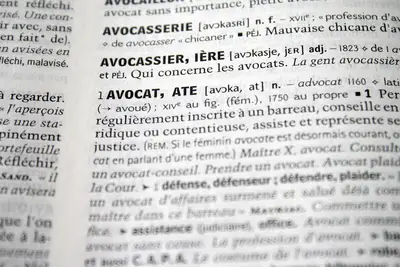
An attorney flips through a thick binder of licensing agreements while debating the legality of a new generative model. The central conflict involves whether using copyrighted songs for training constitutes "fair use" or theft.
The Music AI copyright issue centers on whether developers have the right to ingest protected works to create competing products. Many artists argue that their unique sonic signatures are being harvested without compensation.
This creates a fundamental disagreement between the tech industry and the creative community regarding the ownership of intellectual property.
To address these complexities, different regions have attempted to establish frameworks for digital usage. The European Commission facilitated stakeholder discussion on text and data mining in 2013, under the title of Licences for Europe.
Such discussions aim to balance the progress of innovation with the protection of creators' rights.
However, these risks may not apply to music that has already entered the public domain.
Can I find an ethical data source for AI music?
Late at night in the dim office, the researcher winces at the cold glow of the screen while searching for ethical music. A researcher meticulously tags a digital library, trying to ensure every file has a clear chain of permission. Finding a clean, legally sourced dataset remains one of the greatest challenges in the industry.
Developing Ethical AI music data requires moving away from unverified web scraping toward licensed repositories. This involves building partnerships with record labels, publishers, and independent artists to ensure all training inputs are accounted for.
A transparent approach would allow creators to opt-in or opt-out of the training process entirely.
The debate over the data source for AI music often focuses on the lack of transparency in current models. Many large-scale systems are "black boxes," where the specific songs used for training remain undisclosed.
Without clear provenance, the industry faces ongoing scrutiny regarding the legitimacy of its foundational materials.
However, finding a truly ethical source remains difficult when licensing agreements are not transparent.
Can we trace music data origins?
A digital forensic expert runs a script to identify the fingerprints of a specific artist within a generated track. Tracing the lineage of a synthetic melody is becoming a vital part of the legal landscape.
Addressing the Copyright risks in music learning requires advanced watermarking and detection tools. These technologies attempt to identify if a specific piece of copyrighted material was used to influence an AI's output.
As generative models become more sophisticated, the ability to perform an AI music data ethics discussion becomes more reliant on these technical proofs.
The difficulty of this task is significant, as AI does not "copy" a song but rather learns the statistical probability of certain sounds. Consequently, tracing music data origins is not as simple as finding a direct duplicate.
It requires analyzing the underlying stylistic influences that the machine has internalized.
- Identify the digital fingerprint of the audio file.
- Cross-reference the metadata with known databases.
- Verify the lineage through blockchain or watermarking technology.
How does the training data legal debate affect infrastructure?
A city council member stares at a power grid map, realizing the massive load a new facility would place on local residents. The legal and ethical questions of AI are increasingly colliding with the physical realities of energy consumption.
The training data legal debate is not just about intellectual property; it is also about the physical footprint of the servers that process this data. Large-scale AI training requires massive data centers that demand constant, high-intensity electricity.
This has led to social and political resistance in various urban environments.
The environmental and economic impact of these facilities is a growing concern for local governments. In August 2026, Jersey City, New Jersey, approved a ban on standalone data centers with a 9-0 vote.
This decision reflects a growing local fear regarding how these facilities affect public utility costs and energy stability.
I find that the second step in this transition is the most complex.
What are the energy requirements for these systems?
A technician monitors the cooling systems of a massive server farm, where the hum of electricity is constant. The sheer power required to process vast amounts of audio data is staggering.
| Feature | Scale/Impact |
|---|---|
| AI Data Center Power Demand | Equivalent to 2 million households |
| Historical US Data Average | 200 terabytes per sector |
The energy footprint of the industry is a major limiting factor in its expansion. According to the International Energy Agency, in 2025, it was estimated that the larger AI data centers currently under construction could consume as much electricity as 2 million households.
This scale of consumption complicates the ethical discussion by adding environmental sustainability to the list of concerns.
I observed how the massive cooling requirements of these server halls create a distinct, heavy vibration in the floor. This physical reality serves as a reminder that digital music is tethered to immense physical resource consumption.
The current debate over AI music training data remains limited by the lack of a unified global standard for data provenance and energy usage.
However, the energy impact is less significant when using optimized, smaller-scale models.
Related





Comments 0