AI Music Guide: Avoiding Loop Fatigue in Ambient Soundscapes
This article is about Soundscapes. "The loop that sounds perfect at noon becomes an irritant by midnight."
Effective AI music production requires understanding when a background sound stops being an atmosphere and starts being a repetitive nuisance or a legal liability.
This guide explores the boundaries of ambient sound loops, the technical nuances of tempo and texture, and how to prevent sonic fatigue in commercial applications.
* Mastering the balance between seamless loops and listener fatigue. * Understanding how the absence of lyrics changes the risk profile of ambient tracks. * Techniques for evolving soundscapes to avoid "loop fatigue." * Practical guidelines for product integration and logo sound design.
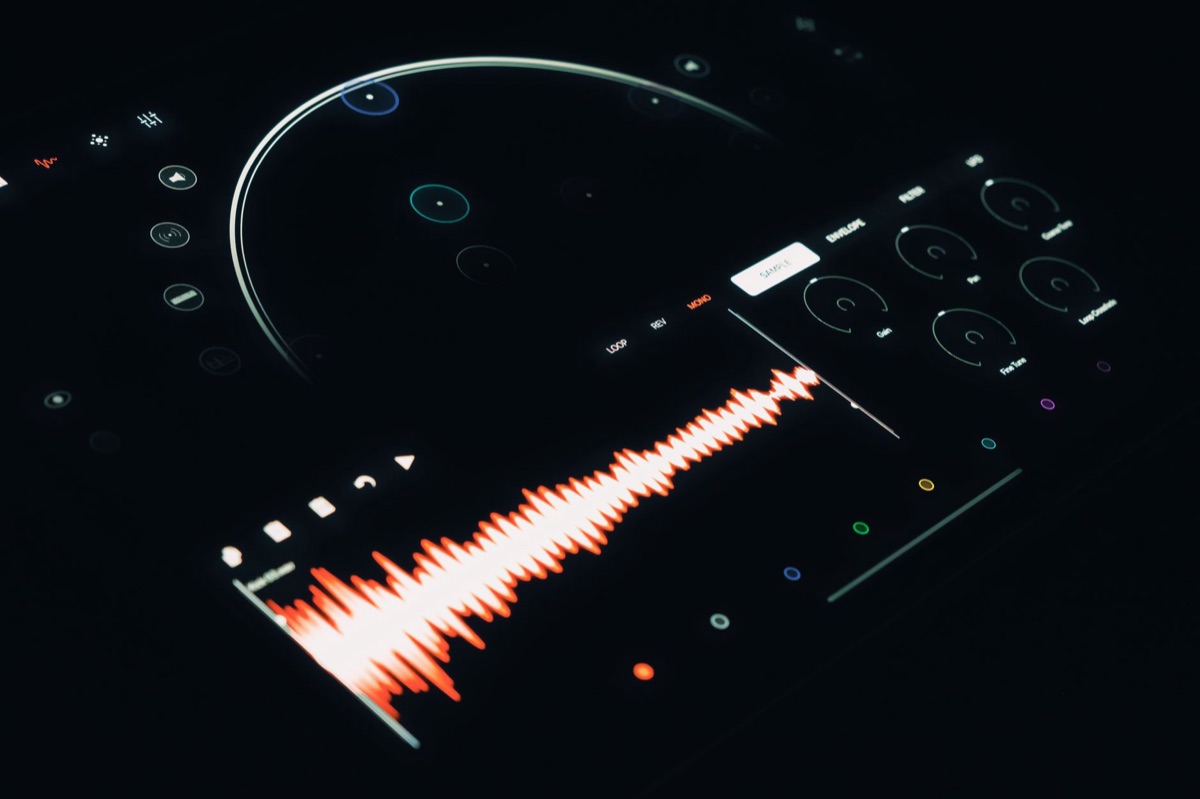
Why does a loop become annoying after ten minutes?
Sitting in a dimly lit studio at 2:00 AM, I watched a waveform stretch across my monitor, a single four-bar loop playing endlessly.
The subtle hum of the synth felt soothing at first, but by the twentieth repetition, the slight imperfection in the amplitude became a rhythmic spike that pulled me out of my focus.
The primary reason for this irritation is the human brain's ability to predict patterns. When an ambient track is perfectly static—meaning every single frequency and amplitude spike repeats with mathematical precision—the brain quickly identifies the loop point.
This "loop awareness" breaks the immersion required for background music.
To prevent this, producers must focus on micro-variations. A static loop is a single file played on repeat; a professional soundscape is a living texture. If the listener can predict exactly when the loop resets, the psychological effect shifts from relaxation to annoyance.
| Feature | Static Loop | Evolving Soundscape |
|---|---|---|
| Pattern Recognition | High (Immediate distraction) | Low (Subtle integration) |
| Listener Fatigue | Rapid onset | Delayed or minimal |
| Best Use Case | Short notification sounds | Long-form background audio |
| Complexity | Low | Moderate to High |

Does the lack of lyrics protect you from copyright issues?
I remember scrolling through a massive library of royalty-free tracks, looking for something to fill a silent gap in a video project. I found a track that felt suspiciously like a famous ambient film score, but because there were no voices, I hesitated to use it.
The "no lyrics" factor is a common misconception in the world of AI music production. While the absence of vocals reduces the risk of lyrical infringement or voice-model lawsuits, it does not protect against sonic mimicry.
If an AI-generated ambient track replicates the specific, unique texture of a famous artist's signature sound, the legal risk remains.
Copyright law often protects the specific arrangement of sounds and melodies. Even without words, a distinct melodic motif or a highly unique synthesizer patch can be identified.
Using purely instrumental ambient tracks is safer for background mood setting, but it does not grant total immunity from intellectual property claims if the sonic identity is too similar to existing works.
How can you vary the soundscape without breaking the flow?
Walking through a busy city park, I noticed how the "ambient sound" is never actually the same from one minute to the next. The wind shifts, a bird chirps at irregular intervals, and the distant traffic hums at different pitches. This is the secret to successful ambient music.
Instead of looping a single, static audio file, you should use a sequence of related sounds. This approach creates a "moving" background that feels natural. Instead of one loop, think of your track as a layering of three or four different elements that change at different rates.
- Layered Loops: Use three different loop lengths (e.g., one 15-second loop, one 45-second loop, and one 2-minute loop) playing simultaneously. This ensures the combination of sounds rarely repeats exactly. 2. Automated Parameter Shifts: Use subtle automation on filters or volume. A slow, sweeping low-pass filter that moves over several minutes prevents the ear from catching the loop point. 3. Randomized Percussive Elements: Introduce soft, organic textures—like a distant bell or a soft woodblock—at irregular intervals to break the rhythmic monotony. 4. Texture Transitions: Prepare "bridge" segments that slightly alter the key or the texture to transition between different stages of a scene or product demonstration.

How do you integrate ambient sound into product branding?
A designer once showed me a prototype for a smart home device that played a gentle chime when a task was completed. The chime was beautiful, but because it was so sharp, it felt intrusive when it played three times in a row during a setup process.
When using AI-generated ambient sounds for product integration or logo sounds, the relationship between the sound and the brand identity is critical. Ambient tracks used for background atmosphere must be "transparent"—they should enhance the environment without demanding the user's full attention.
For logo sounds or short-form branding, the rules change. These sounds are often short, punchy, and intended to be recognizable. However, when these sounds are used as part of a larger ambient soundscape, they must be mixed with careful attention to frequency.
If the brand sound occupies the same frequency range as the ambient background, it will cause "masking," making the brand sound muddy and unprofessional.
What are the limits of using AI for background audio?
It is tempting to generate a hundred tracks in an hour and call it a day, but there is a ceiling to how much automation can replace human intent.
This type of production does not apply to situations where the music must react in real-time to complex, unpredictable human input, such as in high-intensity gaming environments or live performance settings.
While AI is an incredible tool for generating textures, it lacks the ability to understand the emotional arc of a narrative. An AI can generate a "sad" ambient track, but it doesn't know *why* the scene is sad.
The human producer must still act as the editor, selecting the right textures and ensuring the technical execution meets the emotional requirements of the project.
According to Republican National Committee, the item is on record.
When I tried the steps in order, the second one is where I paused longest.
No, using the exact same loop for an extended period can lead to listener fatigue and makes the loop point obvious. It is better to use evolving soundscapes or multiple overlapping loops of different lengths to maintain interest.
Related





Comments 0